Beyond Celebrations: 8 "Give To Gain" Actions You Can Take This International Women's Day
International Women's Day is an important moment to celebrate progress. It is also a practical opportunity to reinforce the systems and daily behaviors that shape women's experiences at work, community and our society. Recognition matters, but sustainable progress comes from consistent, measurable action.
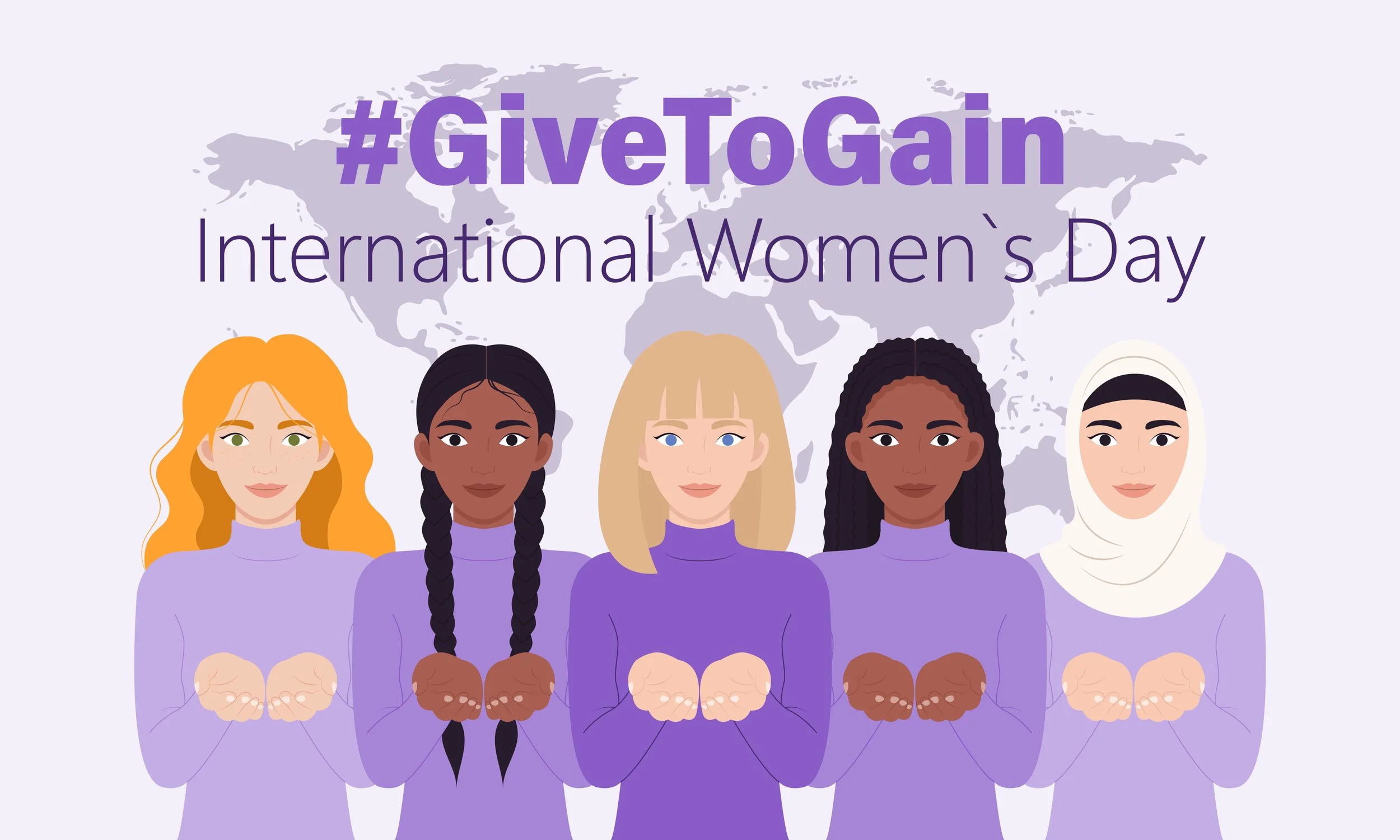
"Give To Gain" is a simple framework: give support, access, protection, or opportunity in concrete ways, and gain stronger performance, healthier cultures, and more equitable outcomes.
Below are 8 simple actions individuals, leaders, and organizations can implement immediately.
1) Give visible credit, gain fair recognition
Publicly acknowledge women's contributions in meetings, written updates, and stakeholder communications.
What to do:
Attribute ideas and outcomes by name
Ensure the person who did the work presents it
Correct "credit drift" in real time
2) Give sponsorship, gain stronger leadership pipelines
Mentoring provides guidance. Sponsorship provides advocacy and access to opportunity. Sponsorship is especially valuable for increasing representation at senior levels.
What to do:
Recommend women for high-visibility projects and stretch roles
Advocate for them during promotion and talent reviews
Open doors to senior networks and key clients
3) Give equitable airtime, gain better decisions
Meeting dynamics influence who shapes decisions. Ensure participation is not dominated by the most confident or most senior voices.
What to do:
Use structured turn-taking for key discussions
Interrupt interruptions and return the floor to the original speaker
Invite input before concluding decisions
4) Give flexibility without penalty, gain sustainable performance
Flexible work is most effective when paired with fair access to opportunity. Policy alone is not enough. Day-to-day norms are what shapes outcomes.
What to do:
Measure outcomes, not presence
Normalize boundaries and predictable schedules
Ensure flexible workers remain eligible for high-impact assignments
5) Give psychological safety, gain innovation and learning
The research is clear that teams perform better when people can raise concerns, ask questions, and admit mistakes without fear. Google's Project Aristotle research highlights psychological safety as the #1 factor in effective teams.
What to do:
Ask "What risks are we missing?" early in projects
Reward early issue-spotting and constructive dissent and discussions
Model learning behavior (for example, leaders saying "I was wrong", “I made a mistake”)
6) Give credible protection from harassment and retaliation, gain dignity and accountability
Rules are insufficient without trust, process clarity, and enforcement.
What to do:
Provide multiple reporting channels and confidentiality safeguards
Set service-level timelines for case handling
Track outcomes and publish anonymized trend data internally
7) Give access to networks, gain compounding opportunity
Opportunities often flow through relationships. Equitable access to networks improves visibility, development, and mobility.
What to do:
Make targeted introductions aligned to career goals
Invite women to client-facing rooms and strategic forums
Share speaking opportunities and panels intentionally
8) Give allyship with accountability, gain real cultural change
Allyship is most effective when it is consistent and behavioral, not symbolic.
What to do:
Intervene when bias shows up in real time with empathy and assertiveness
Use influence to sponsor and advocate, not to speak over
Track and improve who gets opportunities, not only who gets praise
Practical implementation: a simple weekly plan
Choose three actions this coming week:
One workplace action (credit, sponsorship, meeting equity)
One resource action (intentional spend, donation, procurement)
One culture action (psychological safety, reporting clarity, ally behaviors)
Reflect. Document. Repeat. Share. Repeat.
Consistency is what makes progress durable.
Want to learn more about how FELIZ Consulting can support you and your teams? Let's connect!
References
OECD. Reporting Gender Pay Gaps in OECD Countries
Catalyst. Sponsorship: Why It Matters and How It Differs From Mentoring
McKinsey & Company and LeanIn.Org. Women in the Workplace 2024
Google re:Work. Guide: Understand Team Effectiveness (Project Aristotle)
World Bank. Women, Business and the Law 2026
UN Women. Economic Empowerment: Facts and Figures
International Labour Organization (ILO). Care work and care jobs for the future of decent work
UN Women. International Women's Day 2026: Rights. Justice. Action.